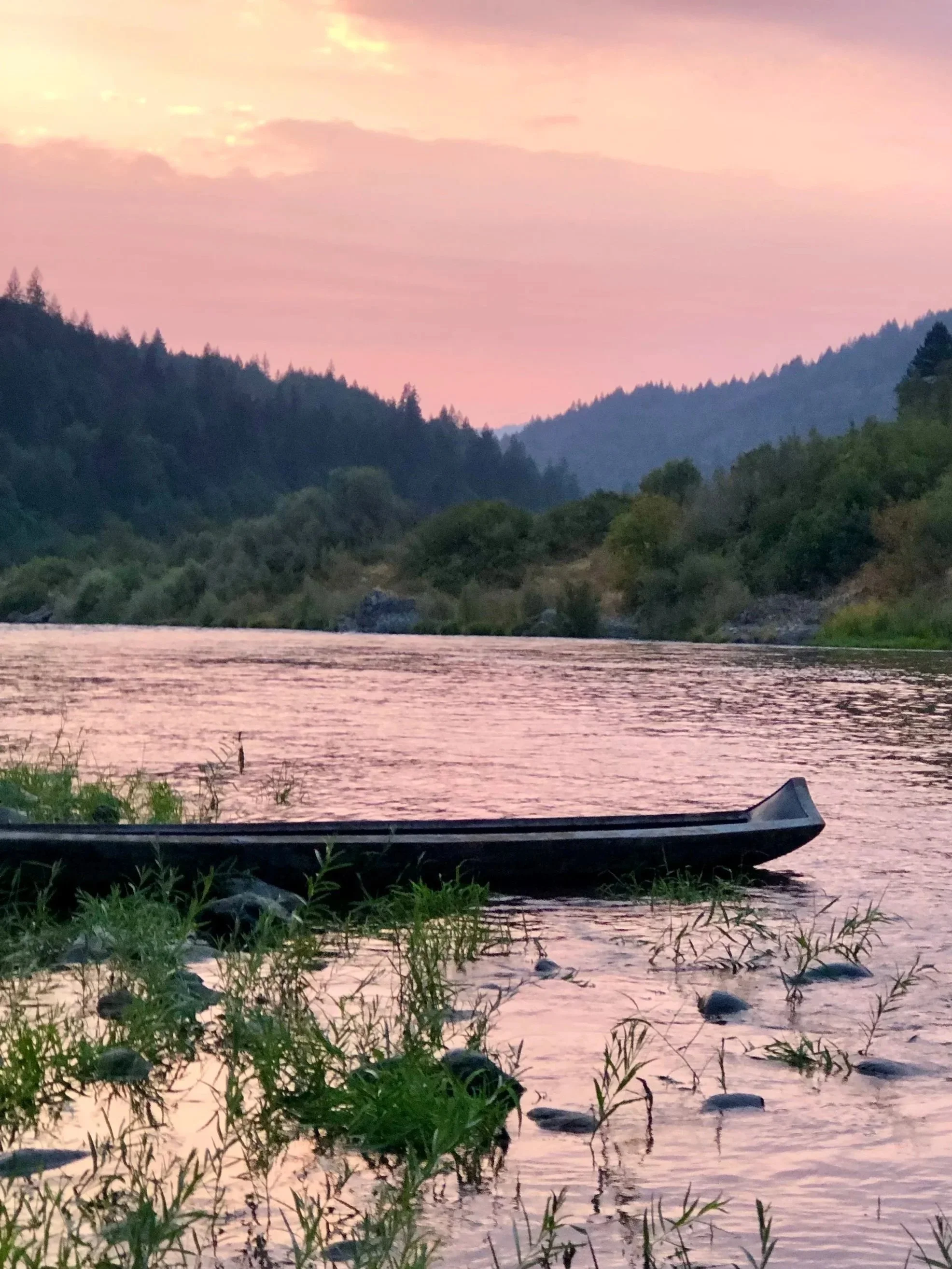
Our lab uplifts Traditional Ecological Knowledges and Indigenous languages
Some aspects of TEK are not appropriate to share publicly. Currently, this page reflects engagement with Yurok and neighboring communities. Some content was developed in partnership with Tribes or their departments, while other content illustrates personal TEK practice of our lab’s founder. As our lab grows and forms new partnerships, the content on this page will continue to be guided by Indigenous Research Methodologies and appropriate permissions.
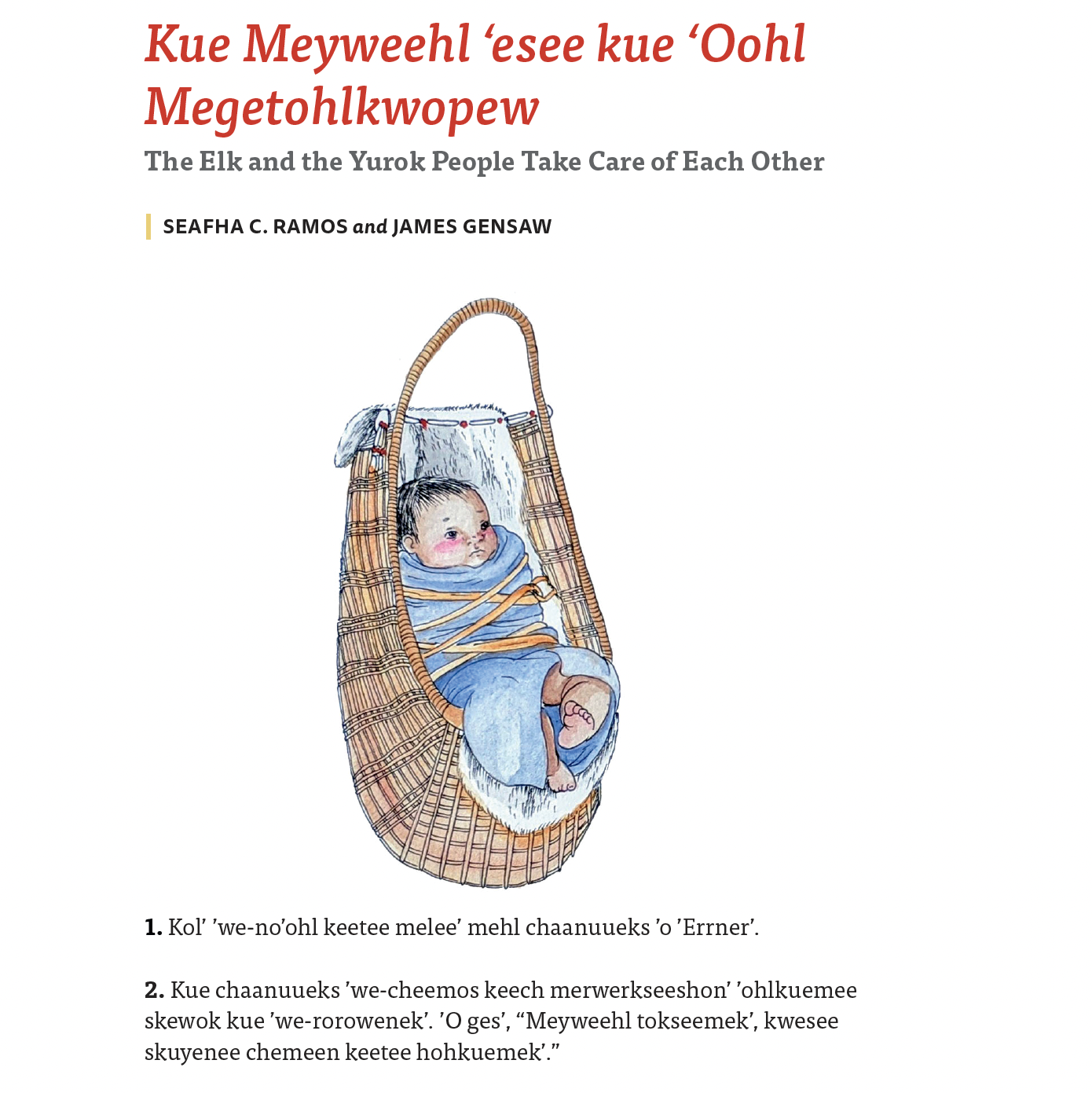
Meyweehl esee ‘oohl megetohlkwopew
(Elk and the Yurok people take care of each other)
This piece is a Yurok language immersion story centered on elk, co-authored by respected Yurok language teacher, James Gensaw, and published in Wildlife Stewardship on Tribal Lands: Our Place is in Our Soul. The story is inspired by elk research and intended to portray the relationship between Yurok people and elk.
Yurok Language
Go on a journey with the little bobcat and his mother as they search for food in the redwood forest! This is a Yurok language immersion story with a written English translation.
Kue cheryker’ery chmuuek esee ‘we-chek
(The little bobcat and his mother)
This piece is a Yurok language immersion story centered on bobcat, inspired by our lab’s wildlife research. It is available as an ebook, in a pay-to-print edition, and as a YouTube video. These works are designed to support language teachers and learners in multiple formats.
The 2nd edition of this story was also featured as a primary figure in a peer-reviewed scientific publication. To our knowledge, this is the first instance of a full story in an Indigenous language appearing in a scientific journal, beyond isolated words or phrases.
Traditional Ecological Knowledge
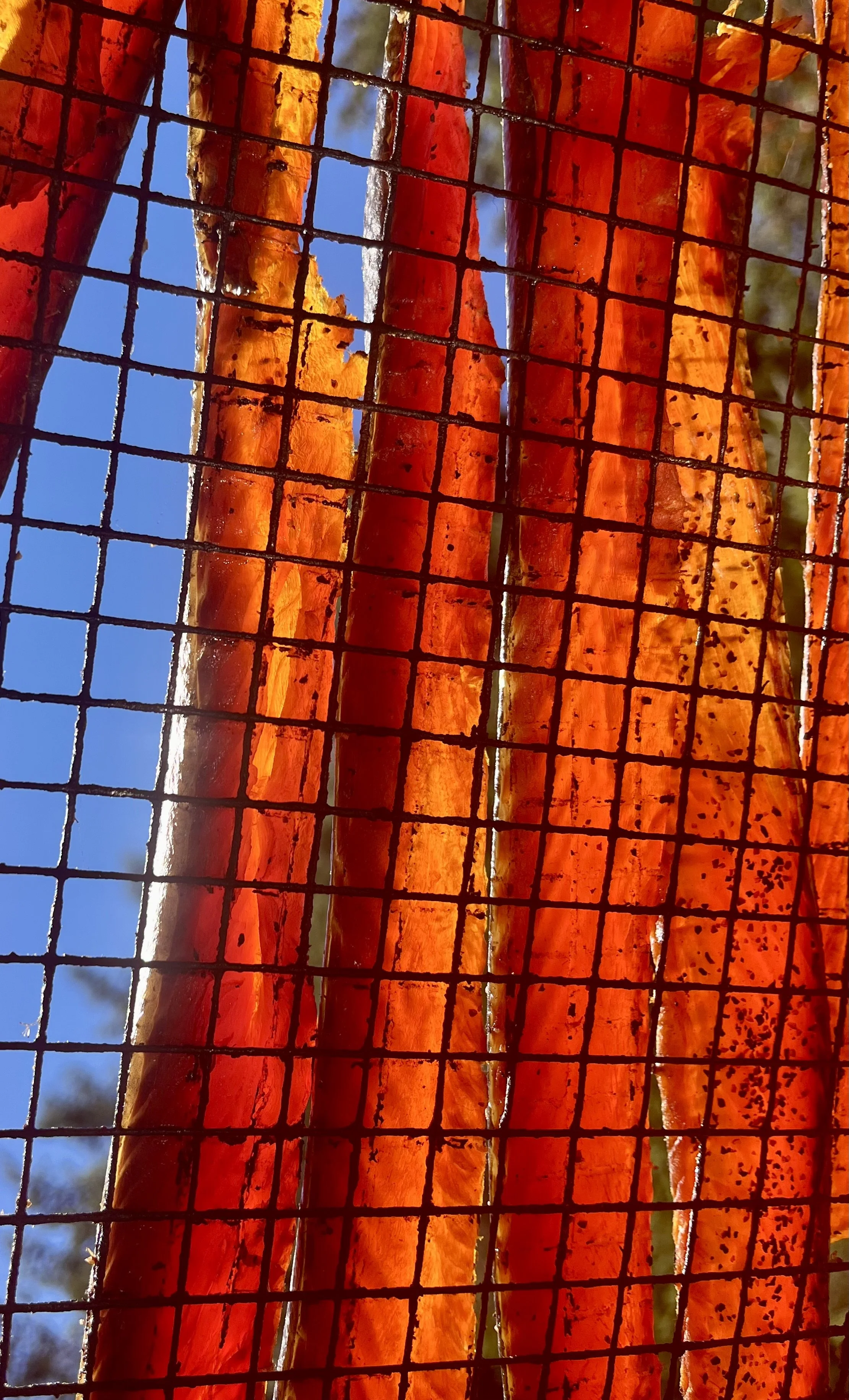
Nepuey (salmon) jerky. Salmon is another traditional food for many Indigenous communities throughout the Pacific Northwest.
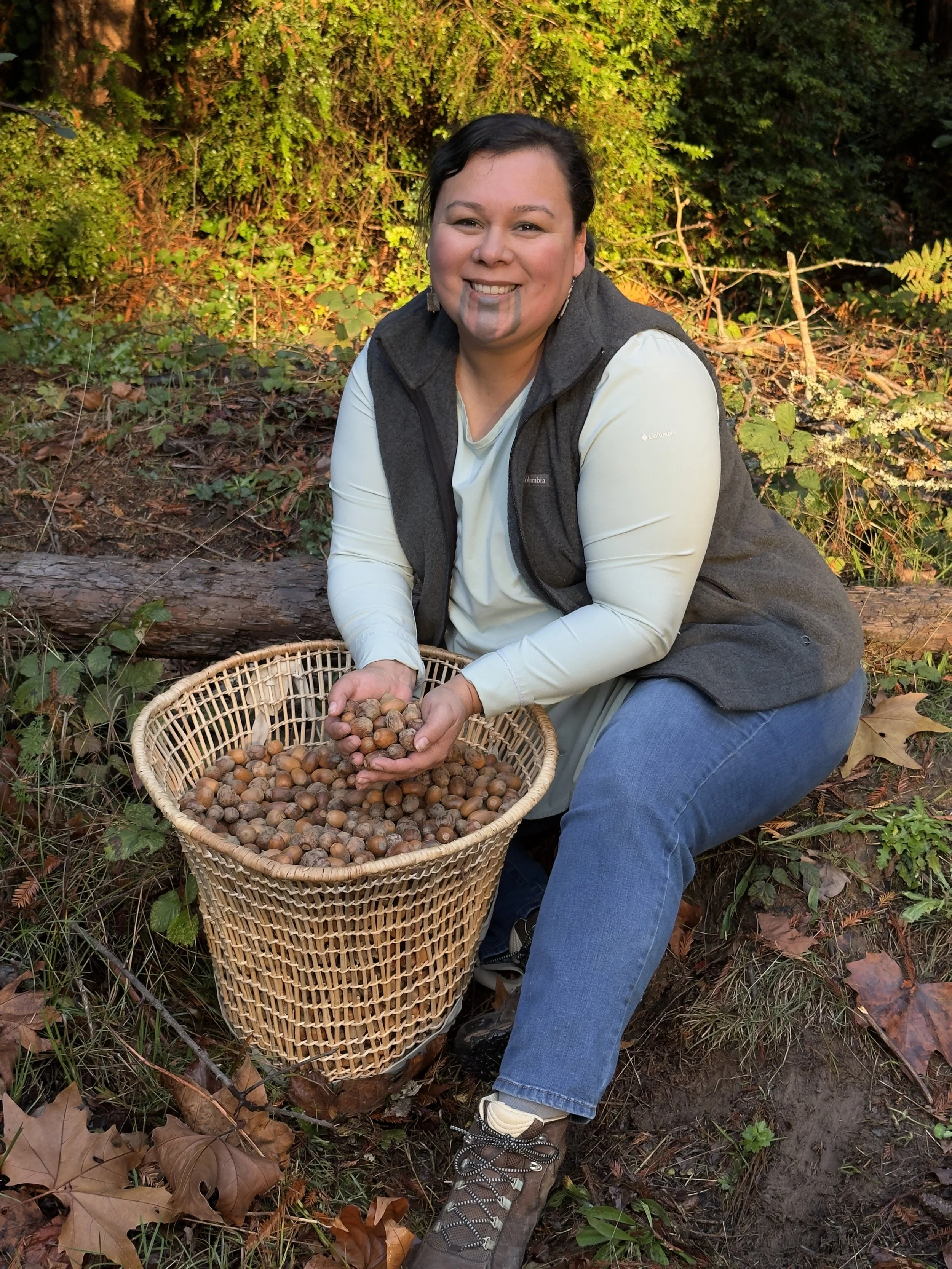
Woomehl (acorn in Yurok) harvest. Acorns are a traditional food for many Indigenous communities, including Yurok and Karuk. This basket, woven with hazel, was made by esteemed weaver Lisa Hillman (Karuk).
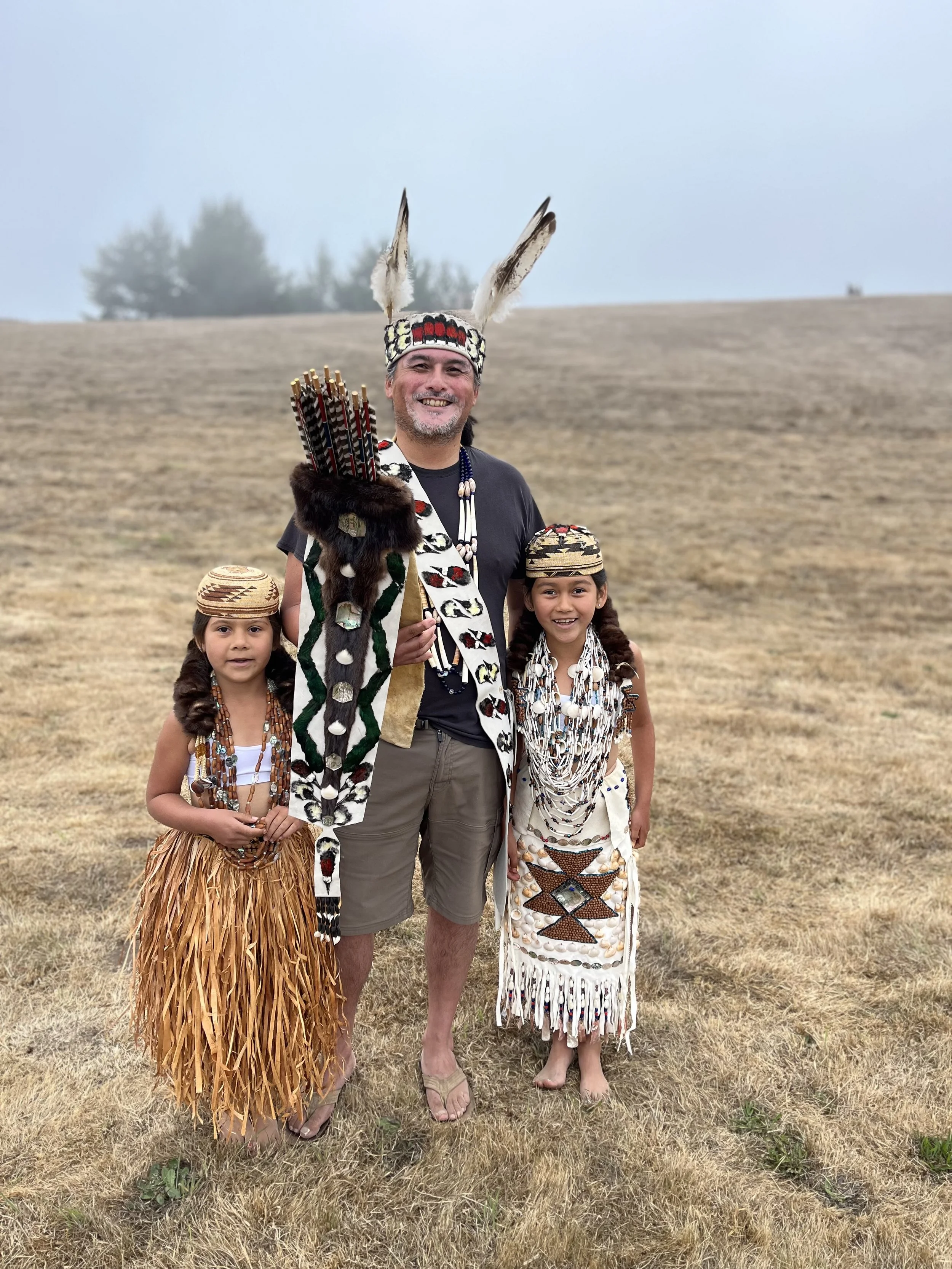
This photo shows several traditional Yurok regalia items. The man is wearing a traditional men’s headband and is holding a quiver. One girl wears a traditional maple bark skirt; the other wears a traditional shell dress, made with hide. Both girls’ basket caps are woven with materials such as sticks, roots, and ferns.